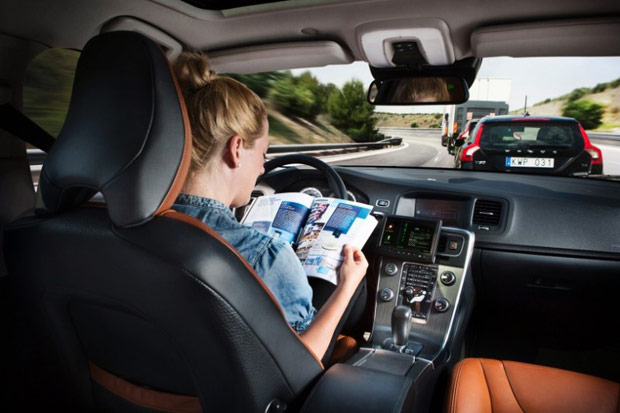
 Autonomous vehicles with no human behind the wheel and even a steering wheel may soon appear on California’s public roads as the state Department of Motor Vehicles released regulations to govern the testing and sale of self-driving cars.
Reade more.
 A Model S slammed into a highway barrier when its autopilot system malfunctioned and failed to spot the merging of traffic lanes.
Several days ago, a Tesla Model S was being driven on autopilot down a highway near Dallas, Texas, when it plowed into a barrier at a construction zone. The driver wasn’t injured, but he blamed Tesla’s autopilot for the accident.
When the road required the driver to merge lanes, for some reason, the autopilot computer on board the Tesla failed to recognize the obstruction and the road change of direction leading the car to crash into the barrier.
The accident was caught on the dashboard camera of a vehicle following the Tesla during the event and the footage actually shows that the Tesla needed to merge or change lane in order to avoid the barrier – a situation that the Autopilot probably shouldn’t be expected to be able to handle.
Forward Collision Warning feature didn’t work as the Tesla’s owner claims that there was no warning. Also, the Automatic Emergency Braking is actually not designed to engage if there is an alternative and in this case, the vehicle wasn’t supposed to brake in order to avoid the barrier, the Autopilot shouldn’t be left to react without the driver intervening.
What is also clear from the video is that the design of the road at the place of the accident is quite awful since even the driver in the car with the dashboard camera almost crashed into the barrier.
Six months ago, Tesla updated Autopilot software to rely more on radar sensors and less on cameras. The update also disabled the automatic steering system if a driver doesn’t keep both hands on the wheel. A few months ago, Musk said that by the end of this year a Tesla should be able to drive in full autonomous mode from Los Angeles to New York without the need ‘for a single touch’ on the wheel. He added that all new Tesla models would come with an $8,000 package for technology that allows the vehicle to drive itself.
According to MailOnline.
 Olli is a talking, electric and self-driving bus which has recently hit the streets of Washington, DC. It has been developed by Local Motors, an Arizona-based automobile technology firm.
The electrically-powered Olli is made from 3D printed parts and can carry 12 passengers. It relies on similar technology that is used on Google’s autonomous cars including a laser-sensing system with 30 sensors, called lidar and a number of cameras. Local Motors teamed up with IBM Watson to make Olli the first bus that has the capability to analyze and learn from transportation data. Olli buses are autonomously controlled by the IBM Watson supercomputer and monitored by humans at all times. Continue reading
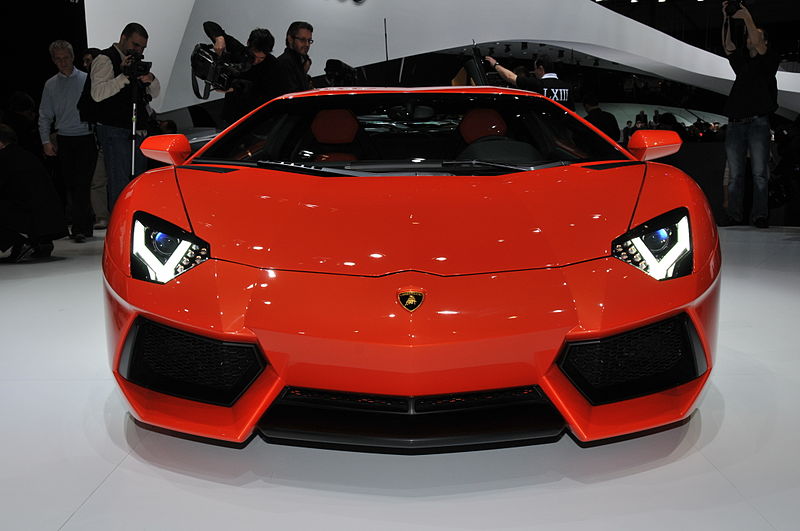 The production version of the Lamborghini Urus, the long-awaited hybrid SUV, will be unveiled at the 2018 Geneva Motor Show.
The new hybrid luxury crossover will cost from around $225,000 and it is set to produce over 600bhp from a 4.0-litre twin-turbo V8. Lamborghini is planning to begin production of its first ever SUV in April 2017.
The famous car brand is planning to start production of its first ever SUV in a couple of months, said Stefano Domenicali, Lamborghini’s CEO during an interview. He also confirmed the new vehicle will be called Urus. Continue reading
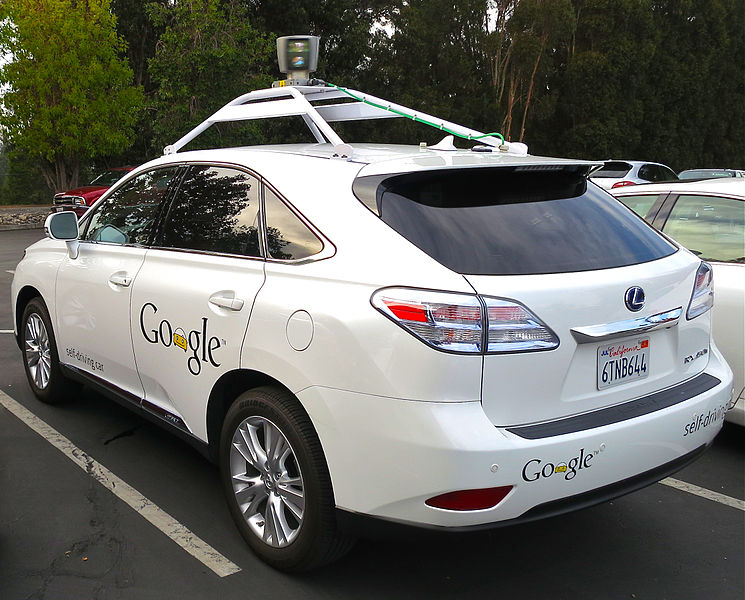 Alphabet’s rivalry with Uber got even more heated up as the internet giant sued the ride-hailing company for allegedly stealing self-driving cars secrets.
According to a lawsuit filed in U.S. District Court in San Francisco on Thursday, a former Google employee stole the designs and technology and started a new company.
Google’s self-driving car company, Waymo, was ‘apparently inadvertently’ copied on an email from a startup providing components for Uber. There was an attachment showing drawings of Uber’s technology: a lidar circuit board that had ‘a striking resemblance’ to Waymo’s design, according to the complaint. Continue reading
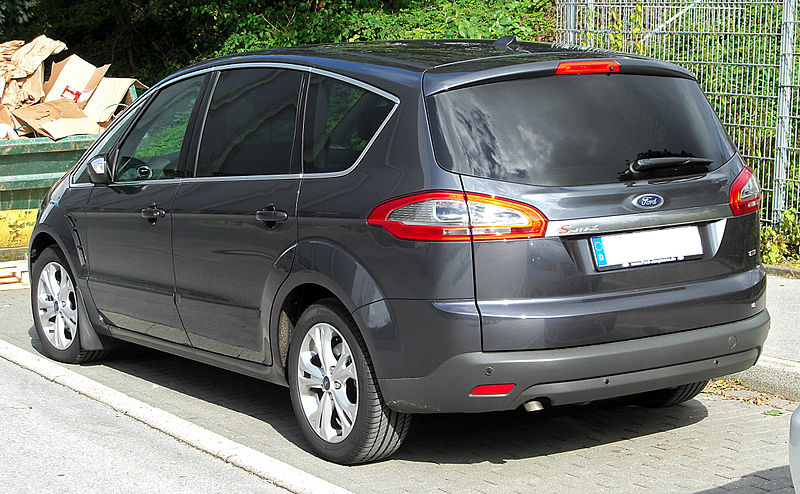 Ford engineers have been falling asleep during test drives of ‘Level 3’ self-driving cars.
As the U.S. automaker has been developing autonomous cars, a number of Ford engineers has started noticing a problem during the tests. They have been falling asleep while assessing Level 3, or ‘conditional’ autonomy cars, even if another person is in the car or stimuli such as sounds and vibrating alerts are used.
Continue reading.
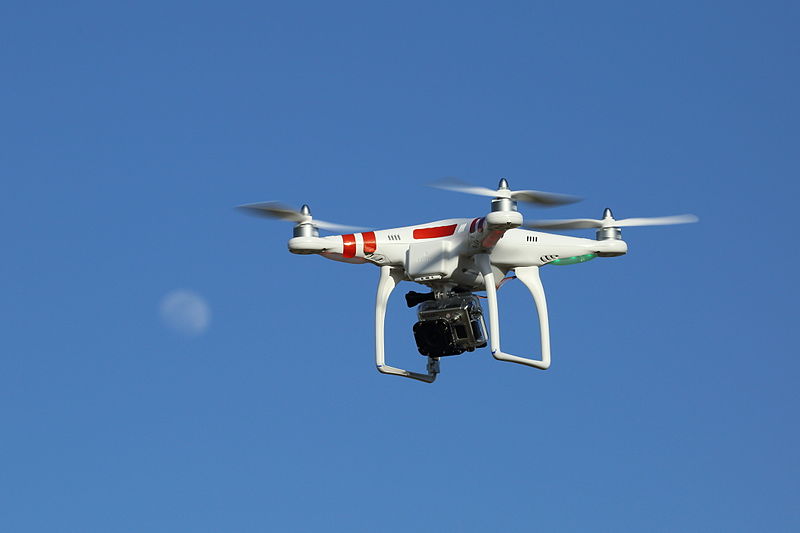 A giant quadcopter big enough to carry a passenger will be flying people around Dubai in July. The announcement was made by Mattar al-Tayer, the head of Dubai’s Roads & Transportation Agency at the World Government Summit last week.
This human-size drone, dubbed EHang 184, is an all-electric vehicle that has four arms and uses a total of eight propellers at the end that allows it to travel up to 60mph. Continue reading
 Amazon Go is a new type of retail store that comes with no cashiers or check out lines.
Two years ago, it was rumored that Seattle-based Amazon filed a patent for a grocery store will let you pick items off shelves and walk out without paying.
The online retail giant confirmed last December they are working on such a project and released a video showing their first physical grocery store that would revolutionize the way people buy groceries. Continue reading
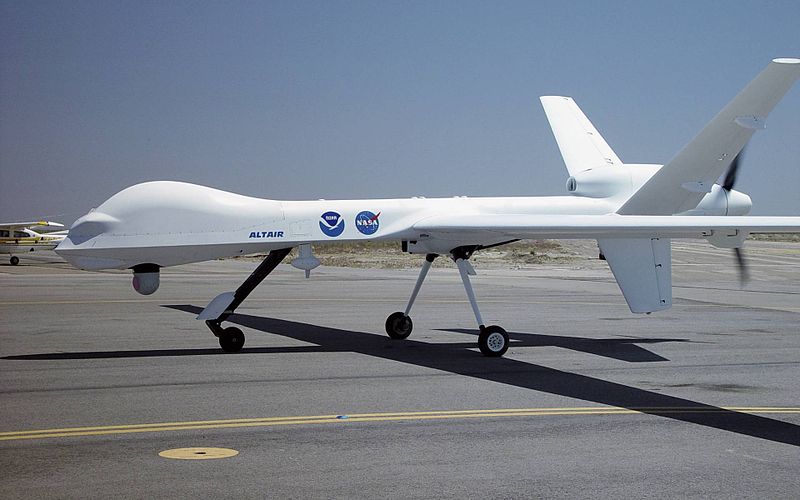 Airbus is planning to test autonomous flying car by the end of the year- a move that could be a big step towards easing congestion on inner-city roads.
Cities are growing and traffic will get worse. As a way of reducing traffic on urban roads, Airbus Group, one of the world’s biggest aerospace companies, is developing a few solutions to urban congestion and one of them is a single person flying vehicle.
The aircraft giant Aircraft, which is second in size only to Boeing, intends to test a small flying vehicle and the prototype would be ready by the end of 2017, chief executive, Tom Enders announced at a technology conference in Germany on Monday. Continue reading
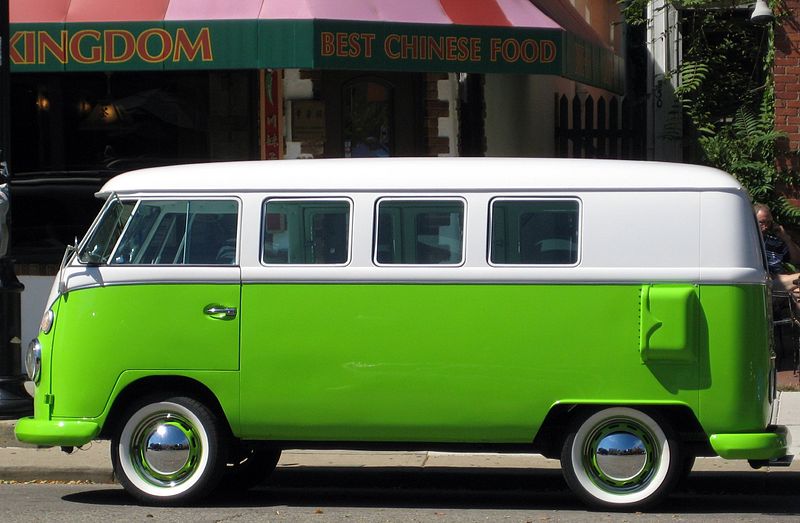 Volkswagen took the wraps off its new I.D. Buzz concept microbus last Sunday at the North American International Auto Show in Detroit.
Touted as “a Microbus for a new era,” the zero-emission vehicle represents the company’s all-electric ambitions.The German automaker’s aim is to sell one million next-generation electric cars annually by the year 2025.
Continue reading.
